
Dental Implants in Fairfax, VA
At Fairfax Dentist, we restore full smiles with permanent dental implants.
Dental Implants – Benefits Beyond Appearance
Replacing a missing tooth can make a difference in how you feel about your smile. Dental implants support custom-made replacement teeth that are matched to the shape, size, and color of your surrounding teeth. For many patients, this provides a natural-looking way to restore an area affected by tooth loss.
The benefits also involve everyday function. Missing teeth can make chewing certain foods uncomfortable and may cause you to rely more heavily on one side of your mouth. Dental implants provide a stable foundation for replacement teeth and can help restore chewing ability. They also help maintain the jawbone around the implant site.
At Fairfax Dentist, we help patients considering dental implants in Fairfax, VA, understand how treatment may improve their oral function and appearance. The results depend on your dental health, the number of teeth being replaced, and the type of restoration recommended.
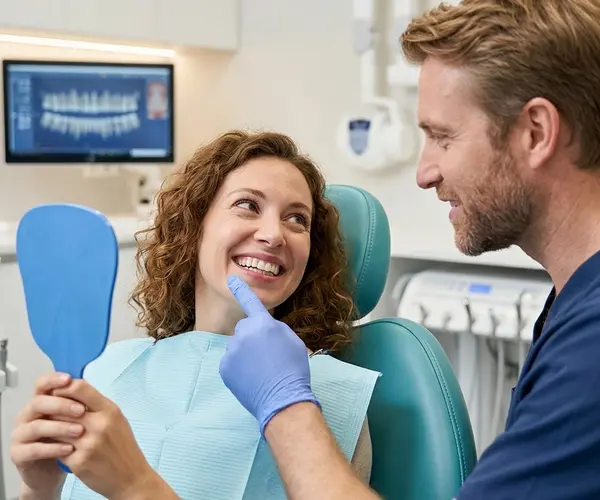
A Confident Smile with Better Everyday Function
Our approach begins with understanding how missing teeth affect your daily life. We examine your oral health, listen to your concerns, and explain what implant treatment may involve before recommending a procedure.
Missing teeth can sometimes affect speech, particularly when gaps change how the tongue contacts the teeth during pronunciation. Replacing those teeth may improve speech clarity, although the outcome depends on the location of the missing teeth and other individual factors.
Tooth loss can also allow neighboring teeth to shift and contribute to changes in the surrounding jawbone. An implant supports a replacement tooth without requiring the preparation of adjacent healthy teeth, as some traditional bridges do. Because the implant transfers chewing forces to the surrounding bone, it can help limit bone loss in that area.
What Happens During the Dental Implant Procedure?
Dental implant treatment usually takes place in stages, with healing time between appointments. The number of visits depends on your oral health, the condition of your jawbone, and whether preparatory procedures are needed.
During the surgical appointment, we use local anesthesia to numb the treatment area. The dentist prepares a space in the jawbone and positions the implant post, which acts as an artificial tooth root. The gum tissue is then managed according to the surgical plan.
Over the following months, the jawbone gradually heals around the implant through a process called osseointegration. This creates the support needed for the replacement tooth.
Depending on your case, we may discuss a temporary tooth replacement during healing. However, a temporary crown cannot be placed directly on every new implant. We’ll explain what is appropriate for your situation before treatment begins.
Dental Implant Results and Final Restoration
Once the implant has integrated with the jawbone and the surrounding tissues are healthy, we can proceed with the final restoration.
An abutment connects the implant to the replacement tooth. We then place a custom-made crown, bridge, or another suitable restoration, depending on how many teeth are being replaced.
For a single tooth, we select the crown’s shape and color to complement the surrounding teeth. We also check the fit and bite to make sure the restoration functions appropriately.
Your implant will need ongoing care, including daily cleaning and regular dental examinations. We’ll explain how to maintain the restoration and recognize signs that need professional attention.
Why do adults lose teeth?
At our practice, we most often trace it back to one of these four factors:
Gum disease (Periodontitis)
Advanced periodontitis eats away at the bone supporting your teeth, causing them to loosen and fall out.
Injury
Severe trauma to the face can knock teeth out or damage them beyond saving, often leading to extraction and implant placement.
Diet deficiencies
Without enough vitamin D, C, calcium, and potassium, your teeth become brittle and prone to decay—and decay can lead to loss.
Chronic illness
Conditions like diabetes, high blood pressure, and rheumatoid arthritis raise your risk of losing teeth.
No matter the cause, the most important step is the same: replacing the missing tooth. Dental implants work for nearly every case of tooth loss. And if gum disease was the root issue, we encourage you to combine implant treatment with periodontal care at Fairfax Dentist to safeguard your smile for the long haul.
Dental Implant Alternatives and Preparatory Procedures
Not everyone has sufficient jawbone to support an implant immediately. Bone loss may occur after a tooth has been missing for some time or because of periodontal disease.
If the available bone is inadequate, we may recommend evaluating whether bone grafting could help prepare the area for an implant. This procedure uses bone or bone-substitute material to build up the affected region. The type of graft and healing period depend on the amount of bone needed and the condition of the surrounding tissues.
Implants are also one of several ways to replace missing teeth. Depending on your needs, a traditional dental bridge, removable denture, or implant-supported bridge may be appropriate.
For patients missing several adjacent teeth, an implant-supported bridge may replace multiple teeth without requiring a separate implant for every missing tooth. The number and position of implants depend on the planned restoration and the available supporting bone.
If you’re looking for an implant dentist in Fairfax, VA, our Oakton office serves patients from Fairfax and surrounding communities. We can examine your teeth and discuss whether implants or another restorative treatment would be suitable.
Dental Implants FAQs
How Long Do Dental Implants Last?
Dental implants are intended to provide long-term support for replacement teeth. Many remain functional for decades with appropriate care, although their lifespan varies between patients. The implant post becomes integrated with the surrounding jawbone, while the attached crown, bridge, or denture may eventually require repair or replacement because of normal wear or damage.
Long-term maintenance is important. Brushing, cleaning around the implant, attending regular dental examinations, and managing gum disease can help protect the surrounding tissues. Smoking, poorly controlled diabetes, and a history of periodontal disease may increase the risk of complications.
During your follow-up visits, we’ll examine the restoration and surrounding gums for signs of inflammation, loosening, or other changes that require attention.
How Long Does It Take to Recover From Dental Implants?
Recovery depends on the number of implants placed, your general health, and whether additional treatment such as bone grafting is necessary. Some swelling, tenderness, and minor discomfort are common during the first several days after surgery. Many patients resume normal daily activities relatively quickly, although individual recovery times differ.
The deeper healing process takes longer. Osseointegration, when the bone heals around the implant, often requires several months before the final restoration can be attached. We’ll provide postoperative instructions and explain what activities or foods to avoid during the initial healing period. If you experience worsening pain, persistent bleeding, fever, or unusual swelling, contact our office for an evaluation.
Does Dental Insurance Cover Implants?
Dental implant coverage depends on your insurance provider, policy, and the reason for treatment. Some plans provide benefits for certain parts of the procedure, such as the crown or diagnostic imaging, while others have specific exclusions or coverage limits for implants.
You may also have deductibles, waiting periods, or annual benefit maximums that affect your out-of-pocket expenses. Medical insurance occasionally provides coverage in circumstances involving qualifying injuries or medical conditions, but this should not be assumed.
At Fairfax Dentist, we can help review your available benefits and provide an estimated treatment cost. We’ll explain the recommended procedures and discuss available payment arrangements before treatment begins.
Are There Any Risks With Dental Implants?
Dental implant surgery is a well-established treatment, but complications are possible. These may include infection, damage to surrounding teeth or tissues, nerve injury, sinus complications in certain upper-jaw procedures, and failure of the implant to integrate with the bone.
Problems can also develop after successful placement. Inflammation or infection around an implant, known as peri-implant disease, may damage the supporting tissues if left untreated. We assess your oral health, bone condition, and medical history before recommending treatment. Careful planning and regular maintenance help manage risk, although they cannot eliminate every possible complication.
We’ll explain the benefits, limitations, and potential risks relevant to your case before you decide whether to proceed.
Can Smokers Still Get Dental Implants?
Smoking does not automatically rule out dental implants, but it increases the risk of healing problems and implant complications. Tobacco use affects blood flow and tissue healing. Smokers may also face a higher risk of periodontal problems and inflammation around implants.
If you smoke, tell us during your consultation so we can discuss how it may affect your treatment plan. Stopping smoking before surgery and remaining tobacco-free during recovery is strongly recommended. Your healthcare provider can offer support if you need help quitting. We’ll assess your oral health and other risk factors before determining whether implant treatment is appropriate.
What Are Mini Dental Implants, and Are They Right for You?
Mini dental implants have a smaller diameter than conventional implants. They may be considered in selected situations, including certain cases involving denture stabilization or limited available bone.
Their smaller size does not automatically make them suitable for every patient or eliminate the need for careful treatment planning. The choice depends on the location of the missing teeth, bone quality, bite forces, and the type of restoration being supported.
Mini implants may not provide the appropriate support for every replacement tooth or bridge. Conventional implants or another restorative option may be preferable. If you’re interested in mini implants, we can assess your needs and explain whether this approach warrants further consideration as part of your treatment planning.
Dental Implants vs. Dentures: Which Option Is Right for You?
Dental implants and dentures are both established options for replacing missing teeth, but they differ in placement, maintenance, cost, and the treatment involved.
Implants are surgically placed in the jawbone and support replacement teeth that can provide stable chewing function. They also help maintain bone around the implant sites.
Traditional removable dentures rest on the gums and can replace several or all missing teeth without implant surgery. They generally involve a lower initial cost, although adjustments or replacement may be needed as the mouth changes over time.
Implant-supported dentures are another possibility for some patients, combining the coverage of a denture with support from dental implants.
At Fairfax Dentist, we’ll examine your teeth, gums, and jawbone before discussing the available options. If you’re exploring dental implants in Fairfax, VA, call 571-541-7977 or schedule a consultation at our Oakton office to learn which treatment may be appropriate for you.
Our Patients Are Saying
Lacey Duvall
“After childhood cancer treatment, my teeth became brittle and prone to breakage. When I finally met my surgeon, he listened to my wishes and performed dental implants. Now my life has changed dramatically, my smile is restored, and I finally feel like I have a world at my feet.”
Paul B.
“As a child, I suffered a traumatic accident that left me with crowns on my front teeth, and over the years, my teeth only got worse. I was skeptical at first, but after reading positive reviews from others, I scheduled a consultation. Honestly, I’m so glad I did. The surgery went great. Now I enjoy smiling again and seeing my friends’ reactions.”
Helen Rice
“I turned to Dr. Barnhart after being turned down by several dentists in the US due to significant bone loss. When he offered me a treatment plan that included implants, I was overjoyed. I had come a long way to get full-arch dental implants with a zirconium bridge, and in just four days, I felt like a completely different person.”
Contact Us Today
Fairfax Dentist offers dental care & Invisalign® to patients in Fairfax, Vienna, Falls Church, Virginia.
Free consultation for first-time patients!